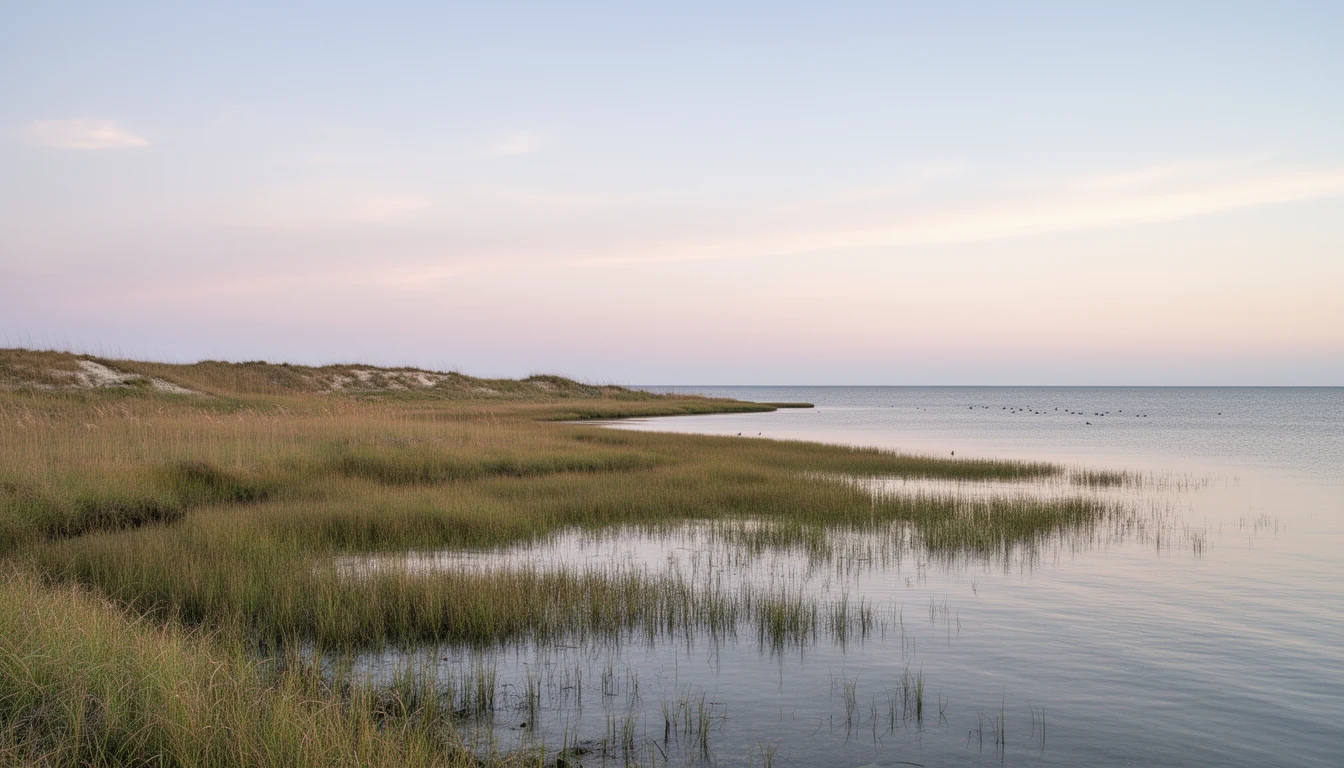

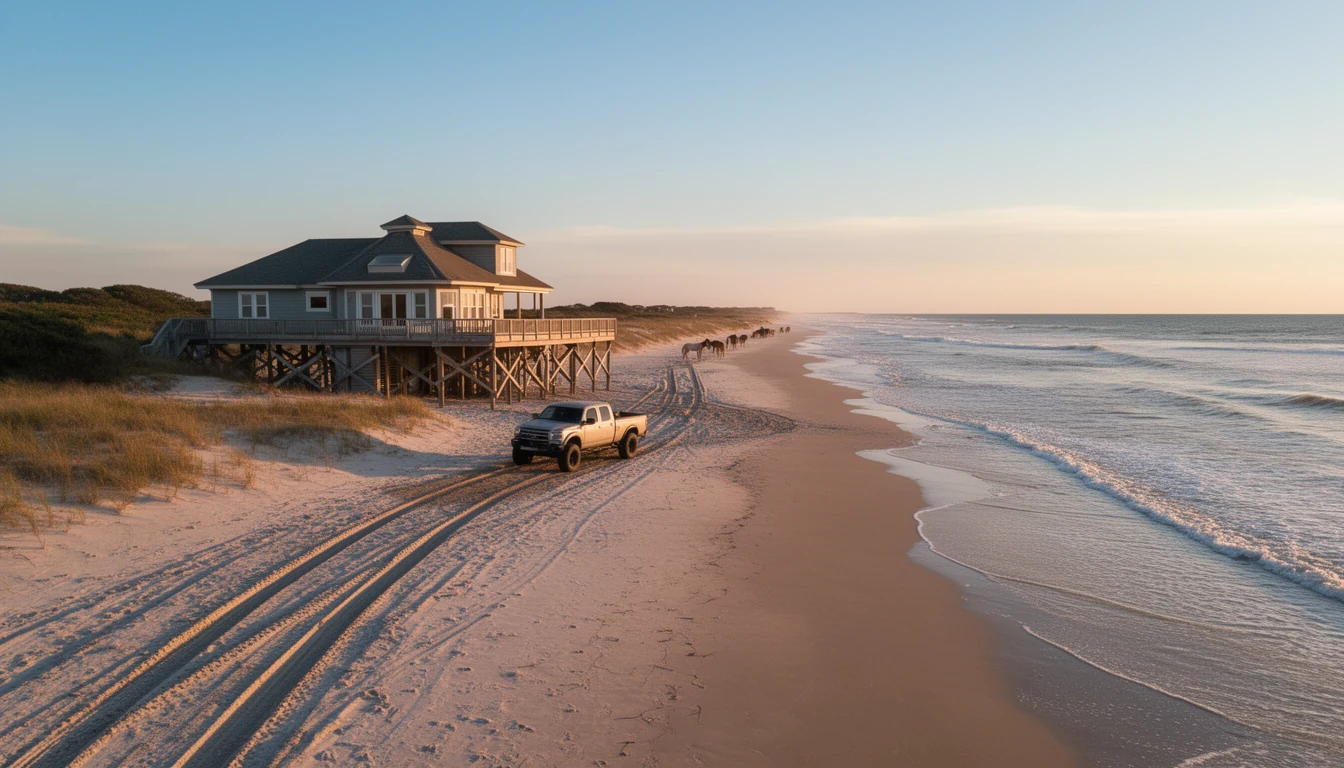
The Carova Beach short-term rental market is real, durable, and consistently misread by buyers who approach it with mainland vacation rental assumptions. The revenue potential is genuine. So are the operating constraints. The investors who succeed here modeled both sides of the ledger before they bought. The ones who didn’t are working backward from a pro forma that only existed in the listing.
Here are the seven questions to answer before you make an offer on a 4x4-zone rental property.
1. What does this property actually gross?
The gross revenue number on a listing is usually the seller’s best year, not the median year. Under competent management, a well-positioned Carova STR runs $55,000 to $150,000+ annually depending on bedroom count, location, and amenity package. Oceanfront properties sit at the top of that range, not the middle.
A new listing with no review history typically runs 15 to 25 percent below a comparable established listing in its first year. Build that ramp into your underwriting. If the deal only works at the top of the revenue range, it doesn’t work.
2. What does the full cost stack eat?
Gross revenue is the headline. Net operating income is the return. The gap between them is substantial.
The chapter’s cost table on a $90,000 gross property shows management fees of $22,500 to $27,000, taxes near $9,700, insurance of $9,000 to $18,000, utilities of $4,800 to $7,200, plus maintenance, supplies, and trash. Model to the high side of every range. A year without storm damage looks very different from a year with a flood event and a major appliance replacement.
3. Is the insurance priced at year-one rates?
This is the question that resets NOI. Private flood insurance in Currituck County is not rate-capped the way NFIP policies are. Carriers reprice annually based on storm loss experience, reinsurance costs, and coastal exposure modeling.
A combined flood and wind line of $9,000 to $12,000 in year one can reset to $14,000 to $18,000 by year three with no claim on your property. In active hurricane seasons, private flood premiums can spike 30 to 70 percent at renewal with 30 days notice. Budget the high end from day one, and stress-test against an additional 40 percent increase.
4. Have you added up every tax layer?
Rental revenue in Currituck County carries multiple tax layers:
- Currituck County occupancy tax: 6% of gross receipts, remitted monthly.
- NC state sales and use tax: 4.75% on short-term accommodation rentals.
- Local tourism development assessments may apply on top.
Combined, the tax load runs near 10 to 12 percent of gross revenue before income tax. Many pro formas omit occupancy tax entirely, which materially overstates net operating income.
5. Who runs the operation, and what does that cost?
The 11-mile beach drive is not a nuisance. It is a logistics environment. Every cleaning turnaround, service call, and maintenance coordination happens around tide windows and 4WD access.
Professional management runs 25 to 30 percent of gross and handles platform management, dynamic pricing, guest communication, and maintenance. For out-of-area owners, that fee is usually the correct default. A hybrid arrangement, where you manage the platform and guest communication while contracting cleaning and maintenance locally, can cut the fee to 10 to 15 percent if you have the time and local relationships. Attempting to build those relationships from out of state while running the listing is the most common reason first-year self-management fails.
6. Does it cash-flow, or are you buying the scarcity premium?
Run the honest math. In the chapter’s illustrative 4BR model, $90,000 gross minus roughly $68,000 in operating costs leaves about $21,700 in net operating income before debt service. At a $700,000 purchase price with 30 percent down and a 7.5 percent portfolio loan, annual debt service runs about $41,000. The property does not fully cash-flow on STR revenue alone.
That is not a disqualifying condition. Many Carova buyers underwrite for equity appreciation, use value, and long-term scarcity premium, with STR revenue partially offsetting carrying cost. Just know which framework you are buying, because the two require very different risk tolerance.
7. What happens in a bad year?
Stress-test your NOI against two scenarios: a below-average rental season with occupancy 15 percent below projection, and a significant maintenance event of $15,000 to $25,000 from storm or system damage.
If the property still works in those scenarios, because you have the reserves and income to absorb the shortfall, you have underwritten correctly. If the math only works in the good scenarios, you are speculating on outcomes you cannot control.
The Bottom Line
The Carova STR market rewards honest underwriting. The scarcity that makes these properties valuable, the CBRS designation and the 4WD access, is the same scarcity that makes them operationally complex. Ask the seven questions before you offer. The answers tell you whether you are buying a business or a bet.
The full revenue, cost, and NOI breakdown lives in the STR rental economics chapter. Want current rental comps and an underwriting walk-through for a specific Carova property? Reach out to Horizon Realty Group and we will run the numbers with you.
Information deemed reliable but not guaranteed. Verify all details independently. This article does not constitute legal, financial, tax, or insurance advice. Consult qualified professionals for your specific situation.