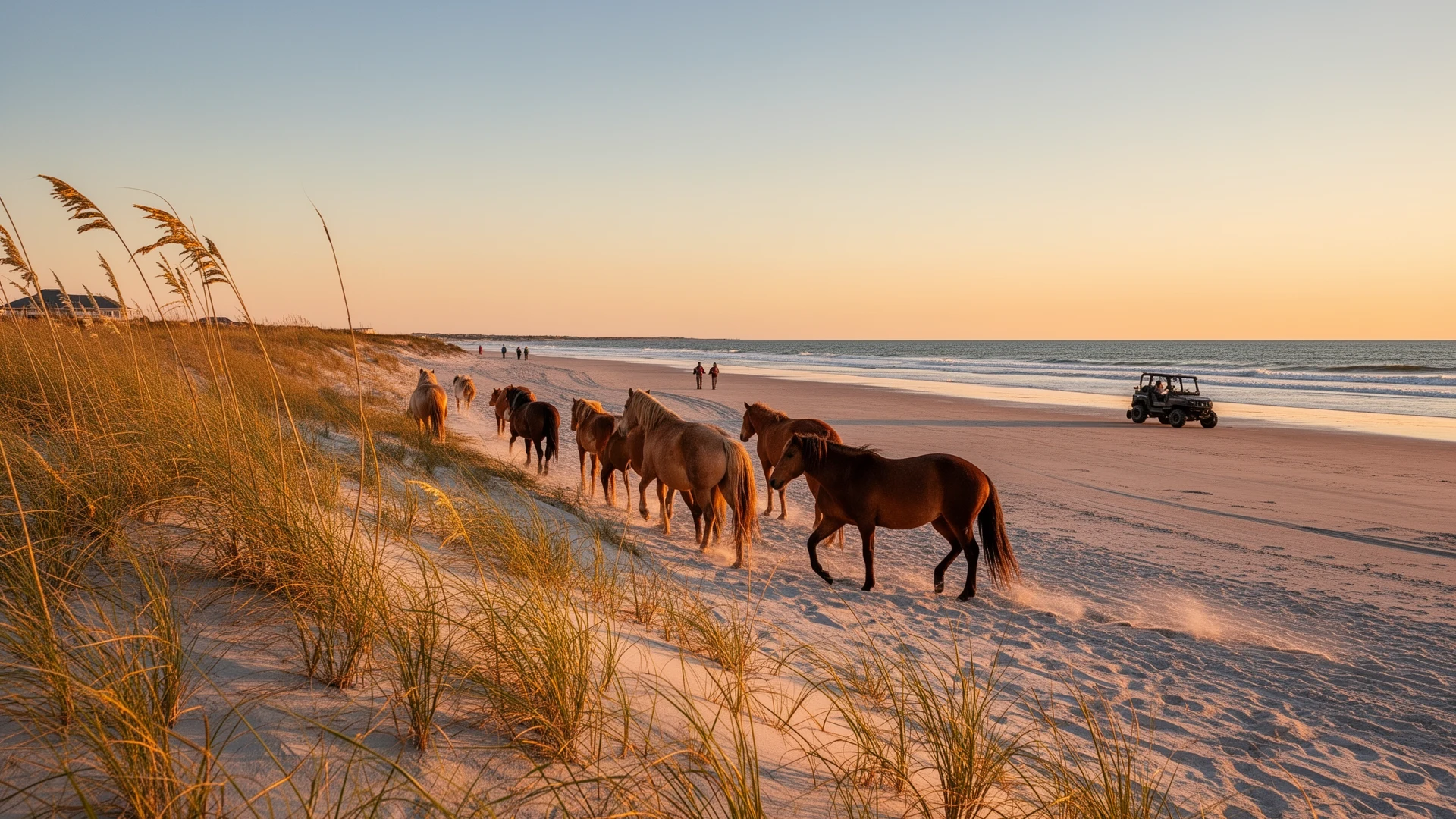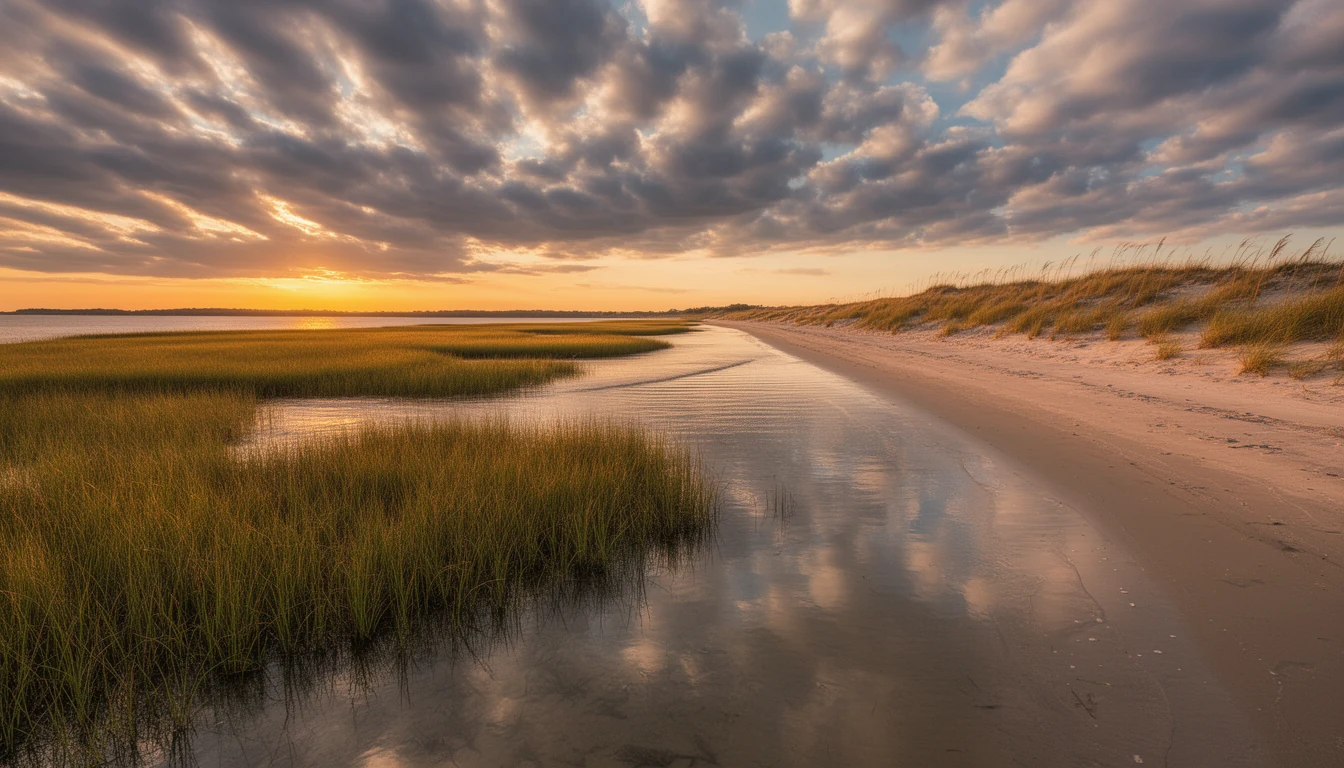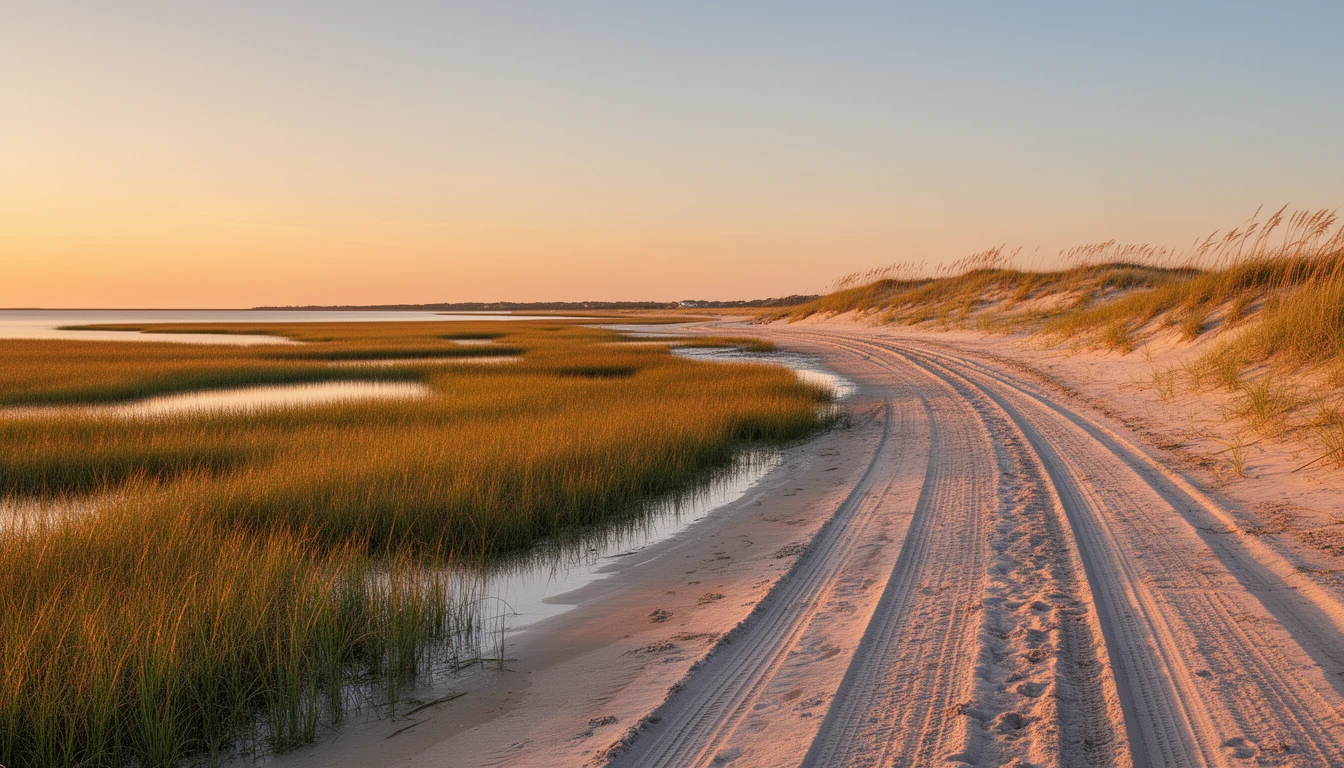


Standing on an oceanfront lot in Carova in February tells you things a July listing photo never will. The wind comes out of the northeast, the tide is still up, and you can watch a sheet of water slide across the beach face and stop a few feet from where the dune grass starts. The house behind you looks solid. The ground it sits on is moving.
That gap between a house and the water is the whole transaction. North Carolina regulates it harder than almost anything else on the coast. Here are the six checks I would run before writing an offer on anything oceanfront north of the pavement.
1. Find the vegetation line before you fall for the deck
The state measures the oceanfront construction setback landward from the first line of stable natural vegetation: not the dune fence, not the lot line, and not the walkway to the beach. For a structure under 5,000 square feet, the setback is 60 feet or 30 times the site’s long-term average annual erosion rate, whichever is greater. Between 5,000 and 10,000 square feet, the setback rises to 120 feet or 60 times the rate.
Pull the parcel’s erosion rate from the Division of Coastal Management’s interactive map viewer, then walk it with the survey in hand. Pace it off. If a deck, a walkway, or a hot tub sits seaward of that line, find out who permitted it, because unpermitted work inside an Area of Environmental Concern attaches to the land and not to the seller. The enforcement letter after closing is addressed to you.
2. Read the erosion rate as history, not as a forecast
Those rates come from more than 50 years of shoreline change, and DEQ is direct about the limits: the data are not intended to be predictive and may not reflect what one major storm or one active season does to a dune. Two Carova lots a quarter mile apart can carry different factors. A stretch that reads as accreting today can flip after a single nor’easter.
The Coastal Resources Commission approved updated setback factors in 2019 and has been reviewing a 2025 update. So when a listing tells you the shoreline is stable, the fair question is which segment of beach, over what period, and from which report. A long-term average is a planning number. It is not a promise about next winter.
3. Pull the FIRM panel and the elevation certificate together
Two documents, two different jobs. The FEMA flood map panel tells you the zone, and the difference between AE and VE matters on the oceanfront. The elevation certificate tells you the base flood elevation against the lowest floor of the actual house. Private flood carriers rate from the certificate, the construction year, and the structure, and they do not owe you the benefit of the doubt.
Carova adds a wrinkle most coastal buyers never deal with. The whole 4x4 zone sits inside the John H. Chafee Coastal Barrier Resources System, and a property that was undeveloped as of the October 1982 designation cannot buy National Flood Insurance Program coverage. There is no fix and no waiver. That puts the risk in the private market and makes your premium a direct read on how the carrier sees the house. Get a real quote before you are under contract. If the certificate is missing or dated, assume the number is worse than the seller implies.
4. Inspect the pilings, not the paint
Carova’s oceanfront stock runs back to the 1970s and 1980s, and a house on pilings in a moving sand system ages in ways a mainland house does not. Look at the ground line for scour around the pilings, decay where the wood meets sand, and exposed or undermined footings. Look at how much sand has piled against the skirt, because grade against an older foundation changes how the load moves. A licensed structural or piling inspection is the cheapest line item here, and the one that most often changes the number or ends the conversation. On anything over 15 years old, make it a contingency.
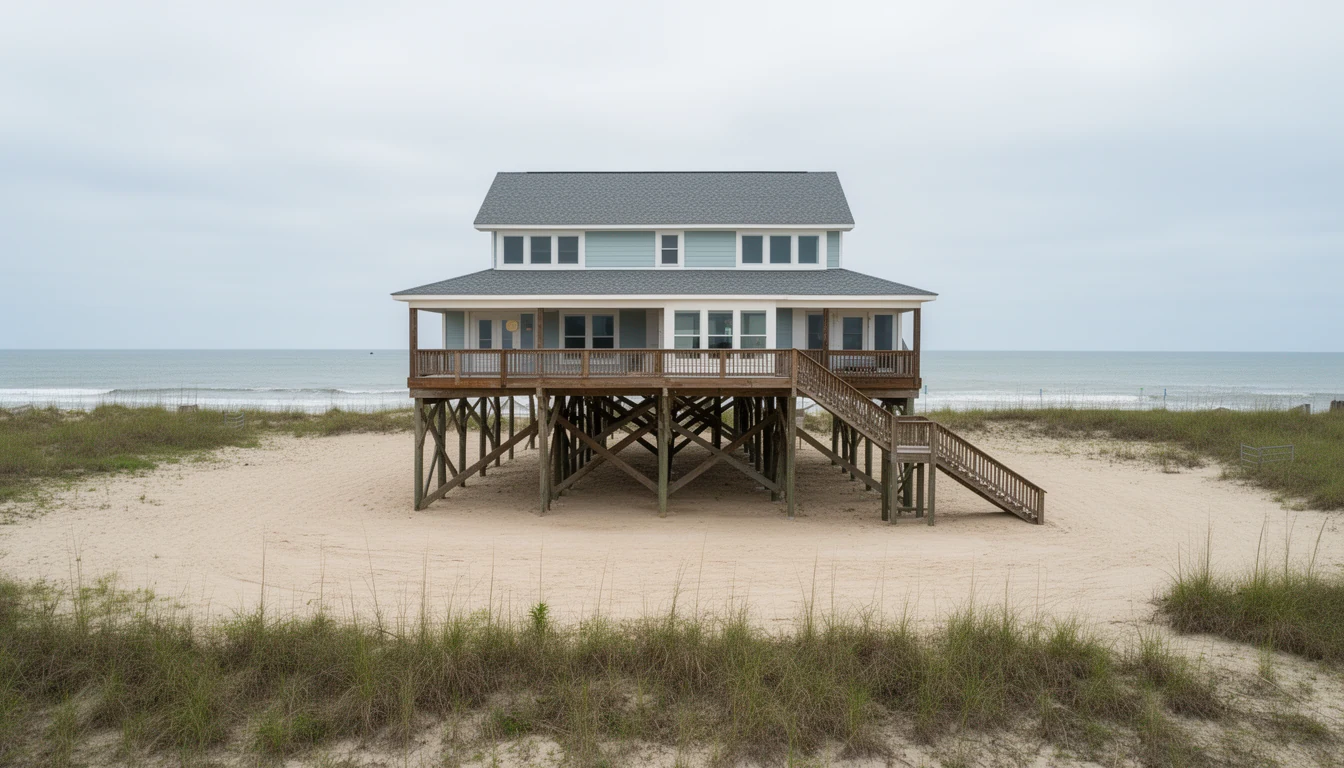
While you are under there, walk the well head and the septic drain field. Saltwater intrusion into a well after a storm, and a drain field that shifts with the sand, are the two failures a standard home inspection will not flag for you.
5. Accept that you cannot build a wall
This is the check that surprises people who have owned waterfront elsewhere. North Carolina prohibits permanent shoreline hardening on the oceanfront. No seawall, no groin, no revetment. The narrow exception is temporary sandbags, and temporary is the operative word: under CAMA rules, the state permits them for two years for buildings 5,000 square feet or less and up to five years for larger ones, and removing them is part of the deal.
So your erosion plan is dune vegetation, sand fencing, and eventually a decision about moving the structure. It is not armoring the shore. If a seller or an agent tells you a seawall is the answer, you are talking to someone who has not read the rule, and you should wonder what else they have not read.
6. Walk the beach route in bad weather
The beach is the road here, which means the access itself is a condition you are buying. Drive the corridor in the off-season. Watch where the high tide actually reaches relative to the dune. Check the sand fence for damage and the dune face for cleared vegetation. Ask a neighbor and the county what the last two storms did to this block, not to Carova in general.
Then sit with it. A washed-out beach route is a day or two of inconvenience in the summer and a different kind of problem when you need a plumber in January.
The trade-off, honestly
What you are buying on the Carova oceanfront is not a fixed piece of land with a view attached. You are buying a house on pilings in a system that moves, in a state that will not let you fight the water with concrete, and in a federal designation that keeps the flood insurance market private. That is a real cost, and it shows up in premiums and maintenance.
What you get for it is a beach with no boardwalk, no high-rise behind you, and horses in the yard at dusk. The buyers who do well out here are the ones who priced the movement in before they got attached to a house. If you are looking at an oceanfront listing north of the pavement, send it over. We will pull the setback line, the flood panel, and the permit file, and you can decide with the numbers in front of you instead of after.