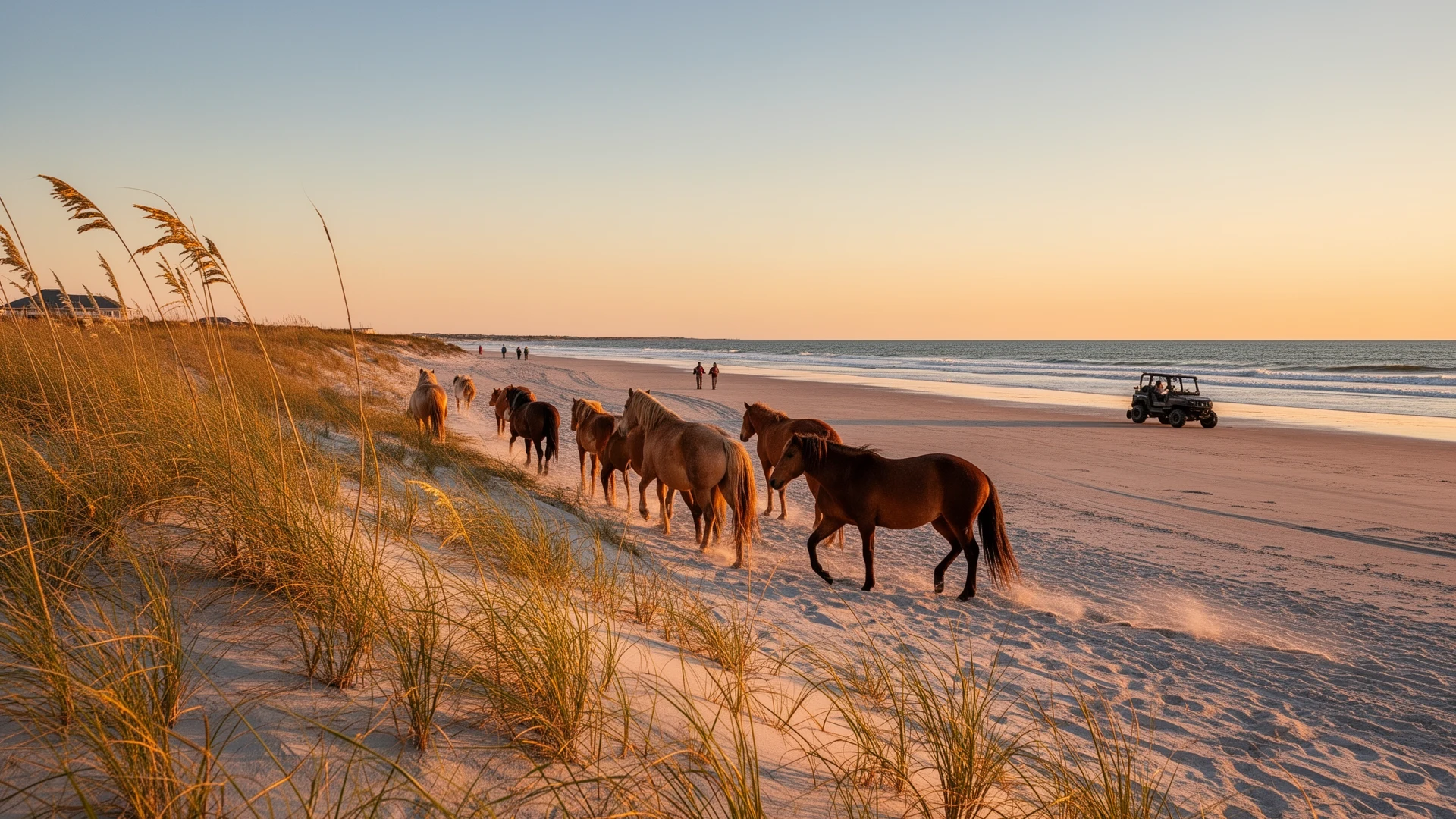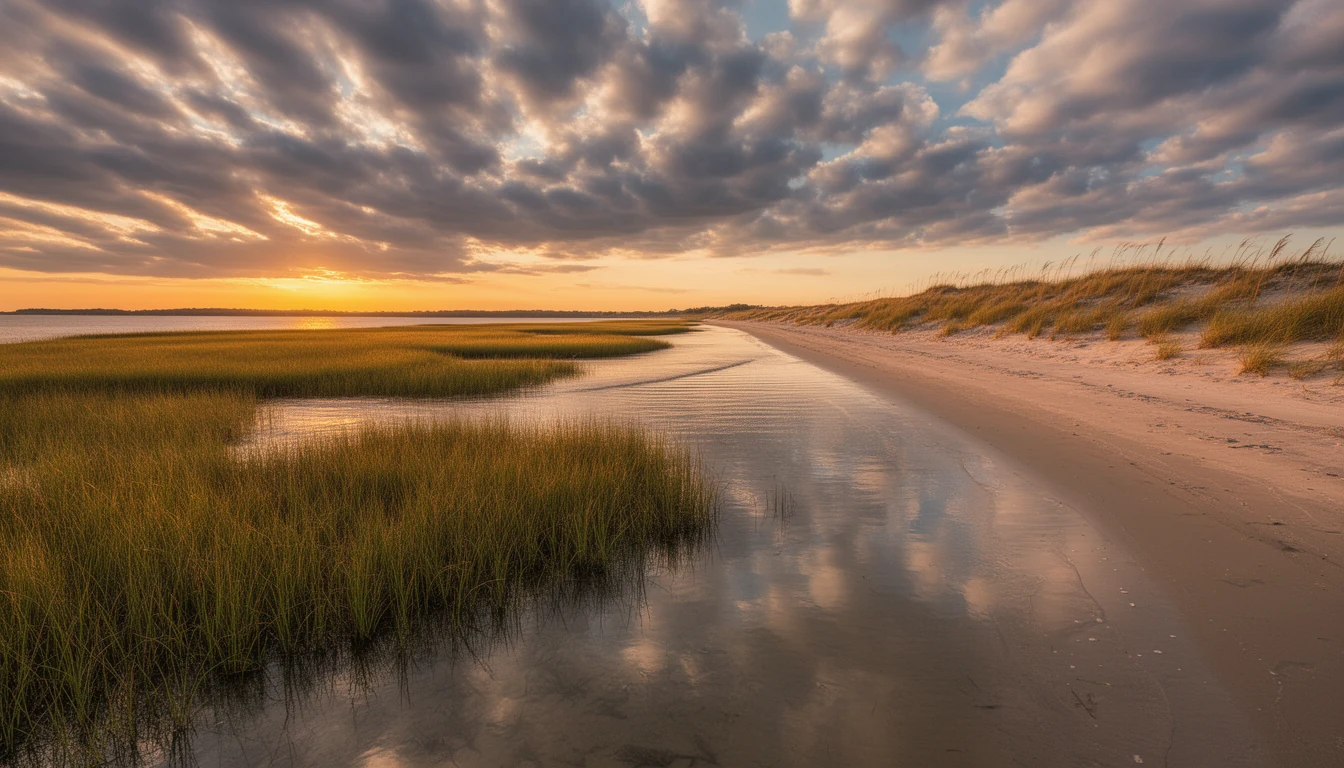


North of Corolla, pavement ends. The paved road gives way to sand, and from there, every trip home is a beach drive. Carova Beach — the 4x4-only community at Currituck County’s northern tip — operates on a different set of rules than anywhere else on the Outer Banks. And those rules extend straight into the mortgage, insurance, and appraisal process.
This isn’t for everyone, and that’s the point. But if you’re looking at Carova, you need to know how the transaction side works when the road doesn’t.
What “No Roads” Actually Means
Carova sits between the Currituck National Wildlife Refuge and the Atlantic Ocean. Roughly 500–600 developed lots spread across 11 miles of beach. There are no state-maintained roads, no curbs, no mail delivery, no school bus service. Access is by 4WD vehicle only — and you need a Currituck County beach driving permit ($120/year) that comes with tire pressure rules and seasonal wildlife restrictions.
Homes run on well water and septic systems (engineered systems run $15K–$30K). Private trash haulers replace municipal pickup. The volunteer fire department serves the area, but response times are longer than anywhere else in the county.
The trade-off: unmatched privacy, direct beach access, and a pace of life that feels a century away from the commercialized Outer Banks.
Financing: What Actually Works?
This is where first-time Carova buyers hit their first real surprise. Conventional mortgage financing is possible — but limited. FHA loans (HUD Handbook 4000.1), VA loans (VA Pamphlet 26-7), and USDA loans all require safe and adequate access via a public street or road. Beach-only access doesn’t meet that standard. Those three programs are effectively unavailable.
What works today:
- Cash — the most common path in Carova. No lender objections when there’s no appraisal contingency.
- Portfolio loans — local banks (TowneBank, First Bank, Southern Bank) hold these on their own books. They’re not sold to Fannie Mae or Freddie Mac, so the bank sets its own access requirements. Rates run slightly higher than conventional.
- DSCR loans — debt-service-coverage-ratio loans for short-term rental investors. The property’s income potential drives the underwriting, not the borrower’s W-2. Popular in Carova’s active STR market.
- Conventional with restrictions — some lenders will write conventional loans on 4x4-only properties if the appraiser confirms year-round access and an independent road-maintenance agreement exists. This is case-by-case and usually requires a larger down payment.
The median Carova listing sits well north of $1M, so the FHA/VA limitation matters less than you’d think — the price point filters most government-backed buyers anyway.
Insurance: The Real Cost of Remote Living
Coastal insurance is expensive everywhere. In the 4x4 zone, it’s steeper. Two mandatory layers come into play:
Flood insurance — most of Carova sits in FEMA-designated VE (velocity) zones. Under NFIP’s Risk Rating 2.0 (effective April 2023), premiums are property-specific. An elevated home on piles might run $3,500–$7,000/year. A non-elevated structure? $8,000–$15,000+. Elevation certificates are mandatory and non-negotiable.
Wind and hail — standard homeowner’s policies exclude wind damage on the coast. The NCIUA Beach Plan is the primary option. For a $500K–$1M dwelling, expect $3,000–$10,000/year.
Add them up: $11,000–$21,000+ annually for combined flood and wind coverage on a $1.2M home. And because Carova’s remote location lowers its fire protection class (ISO rating), expect a 5–15% premium surcharge on top of those numbers.
Appraisal: Finding Comps Where Every House Is Unique
A tiny market means thin comp data. Carova sees roughly 10–20 closed sales per year. With only 6–12 active listings at any given time, appraisers have limited recent sales to work with.
The standard move: pull comps from Corolla (paved-road access, same beach) and apply 4x4-access adjustments. That adjustment is subjective, and low valuations are common. Plan for the appraisal to come in lower than the contract price — and have a conversation with your lender about how they handle appraisal gaps.
Appraisal turnaround runs 2–4 weeks instead of the standard 1–2, partly because appraiser availability is limited and partly because tide schedules dictate when the property can be accessed.
What Buyers Should Do Differently
If Carova is your target, the conventional homebuying playbook needs adjustments:
- Pre-qualify with a local lender who knows the 4x4 zone. A national call center will flag “beach access” and deny the file without understanding Carova’s specific dynamics.
- Budget for total carrying costs — not just the mortgage. Insurance and septic maintenance add $15K–$25K+ annually that most buyers don’t anticipate.
- Get an elevation certificate early. It will save time on flood insurance quotes and may influence your offer price.
- Build an appraisal buffer. If you’re financing, have cash available to cover a gap. It’s common here.
- Talk to a builder before you buy. Engineered septic systems, CAMA permits, and wild horse fencing requirements all add cost and timeline that vary by lot. Know what you’re buying before you owe.
The Bottom Line?
Carova’s 4x4 zone isn’t a harder place to buy — it’s a different place to buy. The financing options are narrower, the insurance is higher, and the appraisal process is slower. But the market has been working this way for decades, and local lenders, agents, and appraisers know how to navigate it.
The key is knowing what you’re walking into before you make an offer. The beach driving permit is the easy part.
Information deemed reliable but not guaranteed. Verify all details independently. This article does not constitute legal, financial, or insurance advice. Consult qualified professionals for your specific situation.