
Corolla’s Wild Horses: Four Centuries on the Outer Banks
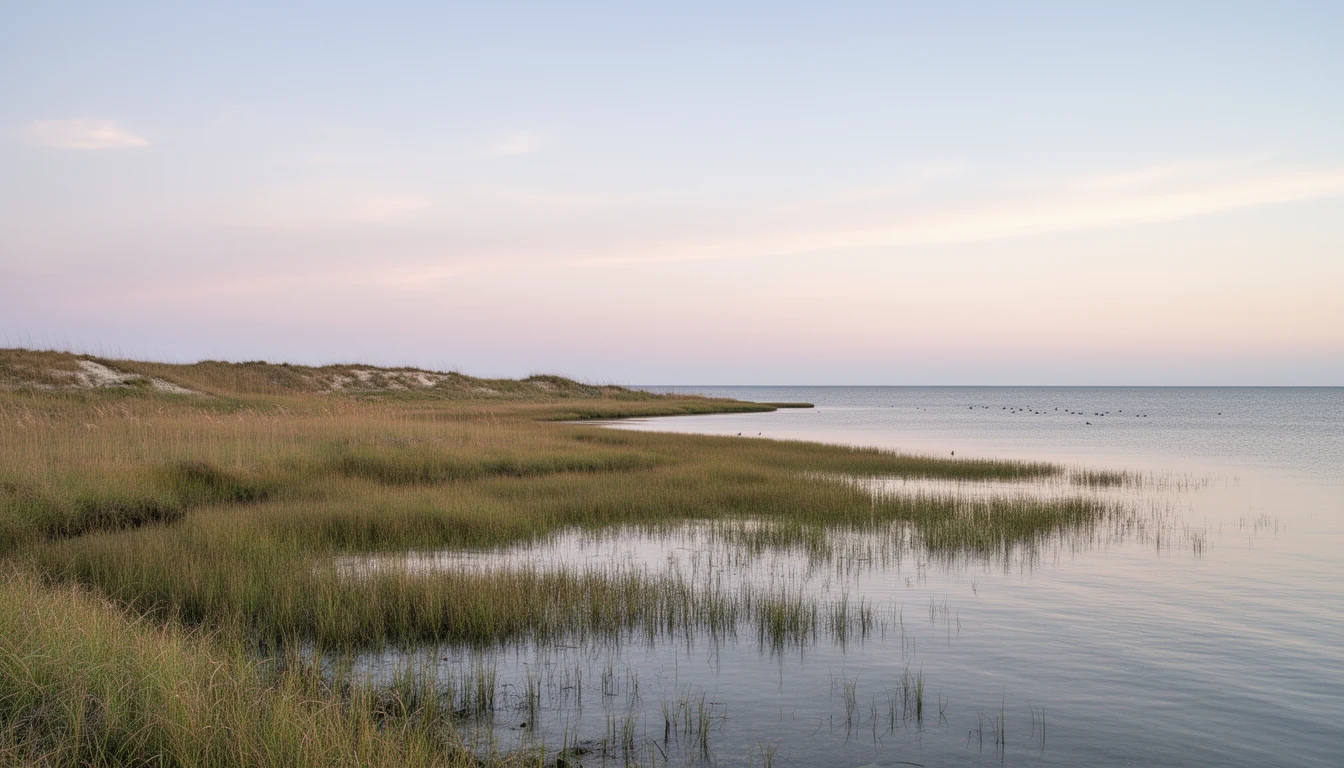
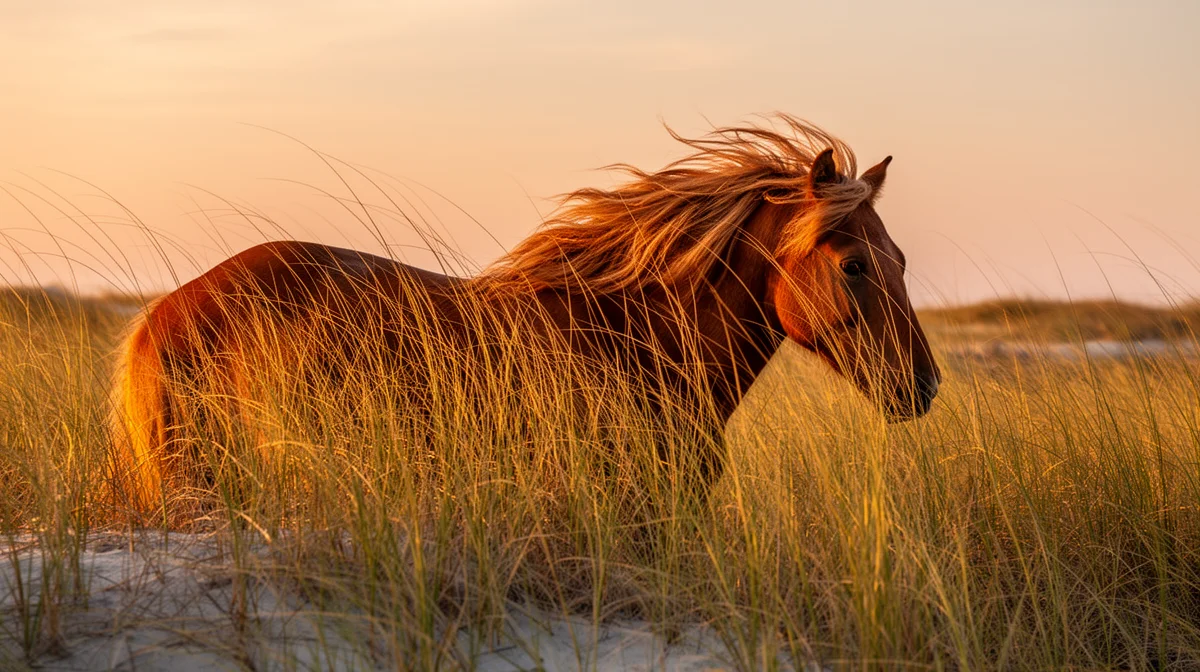
North of Corolla, where NC-12’s pavement ends and the 4WD beach begins, a herd of roughly 100–110 feral horses occupies roughly 7,500 acres of barrier island spanning state and private land in Currituck County. The Corolla Wild Horses (also called Banker horses) are one of the few remaining free-roaming horse populations on the U.S. Atlantic coast.
These horses have inhabited the barrier islands since at least the late 1500s — roughly 430 years — surviving hurricanes, nor’easters, and the steady encroachment of development. Their origins, biology, and management are equal parts history, science, and conservation.
Where They Came From: The Shipwreck Theory
The most widely told origin story traces the Corolla horses to Spanish galleons wrecked along the Outer Banks in the 16th century. The Graveyard of the Atlantic claimed hundreds of ships, and the theory holds that horses onboard those vessels swam ashore and established feral populations on the barrier islands.
DNA evidence supports a Spanish connection. Dr. Gus Cothran’s research at Texas A&M found strong Iberian (Spanish) genetic markers in the Corolla herd, consistent with Spanish colonial horses from the 1500s. However, the herd also shows admixture from later breeds — American Quarter Horse, Arabian, and other light horse strains — indicating cross-breeding with escaped or abandoned domestic animals over the centuries. The leading genetic evidence points to a multi-source origin: predominantly Spanish/Iberian foundation stock, with substantial English and American admixture accumulated over roughly 400 years on the islands.
Life on the Edge: How They Survive
The Corolla horses have adapted to one of the more demanding environments on the Atlantic coast.
Compact size. Standing 13.0 to 14.3 hands (52–59 inches) at the withers, they’re noticeably smaller than most domestic horses. Smaller bodies require fewer calories, and on a barrier island where edible vegetation is scarce, smaller horses survive better.
Freshwater management. The barrier islands have no freshwater springs or permanent ponds. The horses rely on ephemeral pools of rainwater and moisture from the vegetation they consume. They also dig shallow wells — 2.5 to 4 feet deep — to reach the freshwater lens that sits atop the saltwater table. In extreme drought conditions, horses may resort to drinking seawater, but this causes dehydration and kidney stress and is a last-resort behavior, not a sustainable adaptation.
Self-maintaining hooves. The sandy beaches naturally wear their hooves, eliminating the need for shoeing — a trait common to most feral horses on sandy terrain.
Diet. They subsist on salt marsh cordgrass (Spartina alterniflora), sea oats, dune panicgrass, and in winter months, tree bark and greenbrier. A 1987 study found that Spartina makes up about half their diet, while only 4% of their nutrients come from maritime forest vegetation — the greater ecological impact is from trampling, not grazing.
Ecological Impact: The Trade-Off
The Banker horses are not native to the barrier islands, and their presence carries costs. The National Park Service has documented that feral horses can trample plants and ground-nesting animals, including sea turtles and shorebirds. A 2004 study found that the greater impact on plant life is from hooves, not grazing. These horses are allowed to remain due to their historical and cultural significance — a policy choice supported by state law and the 2013 Consent Decree, not an ecological inevitability.
The Corolla Wild Horse Fund: Managing a Wild Population
The herd is managed by the Corolla Wild Horse Fund (CWHF), a 501(c)(3) nonprofit founded in 1989.
Population control via PZP. The primary management tool is Porcine Zona Pellucida (PZP) immunocontraception — a dart-delivered birth control vaccine administered annually to select mares. The effects are reversible; if a mare is no longer darted, she regains fertility. This allows the fund to maintain the herd near the legally agreed target of 110–130 horses without roundups or removals.
As of 2024, the herd stood at approximately 100–110 individuals — slightly below the target range but stable, with neither significant decline nor rapid growth.
The Betsy Dowdy Equine Center. Located in Grandy, NC, this 31-acre facility houses horses that need to be removed from the wild for medical, behavioral, or habituation reasons. CWHF purchased the farm in fall 2018. It includes rehabilitation paddocks, veterinary facilities, and an adoption program for horses that cannot be returned to the wild.
Health monitoring. CWHF staff and trained volunteers conduct regular visual monitoring. The Herd Manager is on call 24/7. Emergency rescue is available for horses injured by vehicle strikes, fishing line entanglement, or illness. Horses are identified by natural markings and territory, not by branding or microchipping.
The Legal Framework
The Corolla horses occupy a complicated legal space. Unlike the Shackleford Banks herd (protected within Cape Lookout National Seashore, about 120 miles south of Corolla), the Corolla horses primarily occupy state and private land in Currituck County, limiting direct federal protection.
The 2013 Consent Decree. After the U.S. Fish and Wildlife Service denied CWHF a permit to introduce new genetic stock, the fund sued. The resulting settlement established the current management framework:
- Target population of 110–130 horses
- CWHF designated as the official managing entity
- PZP birth control as the primary population tool
- Limited genetic introduction permitted — up to 10 horses from Shackleford Banks over a 10-year period
North Carolina state law. NC General Statute § 19A (Wild Horses Protection) makes it illegal to harass, feed, or injure wild horses on the Outer Banks.
Federal legislation. The Corolla Wild Horses Protection Act is a federal bill that has been introduced in multiple Congresses since 2013. It passed the House of Representatives in 2013 but died in the Senate, and has been reintroduced in subsequent sessions without passage. As of 2026, it has not been enacted into law.
Currituck County ordinances. County code reinforces state law with a 50-foot minimum distance rule and makes feeding, enticing, or seizing horses unlawful.
The Biggest Challenge: Low Genetic Diversity
The most urgent long-term concern is genetics. With roughly 100–110 individuals, the Corolla herd has low genetic diversity — a concern shared by many small, isolated wildlife populations. Inbreeding depression could reduce foal survival rates and increase vulnerability to disease over time.
The genetic introduction permit from USFWS was designed to address this, allowing carefully selected horses from Shackleford Banks to be introduced to the Corolla herd. Implementation has been slow, with only a few introductions completed as of 2024.
Living Alongside the Wild
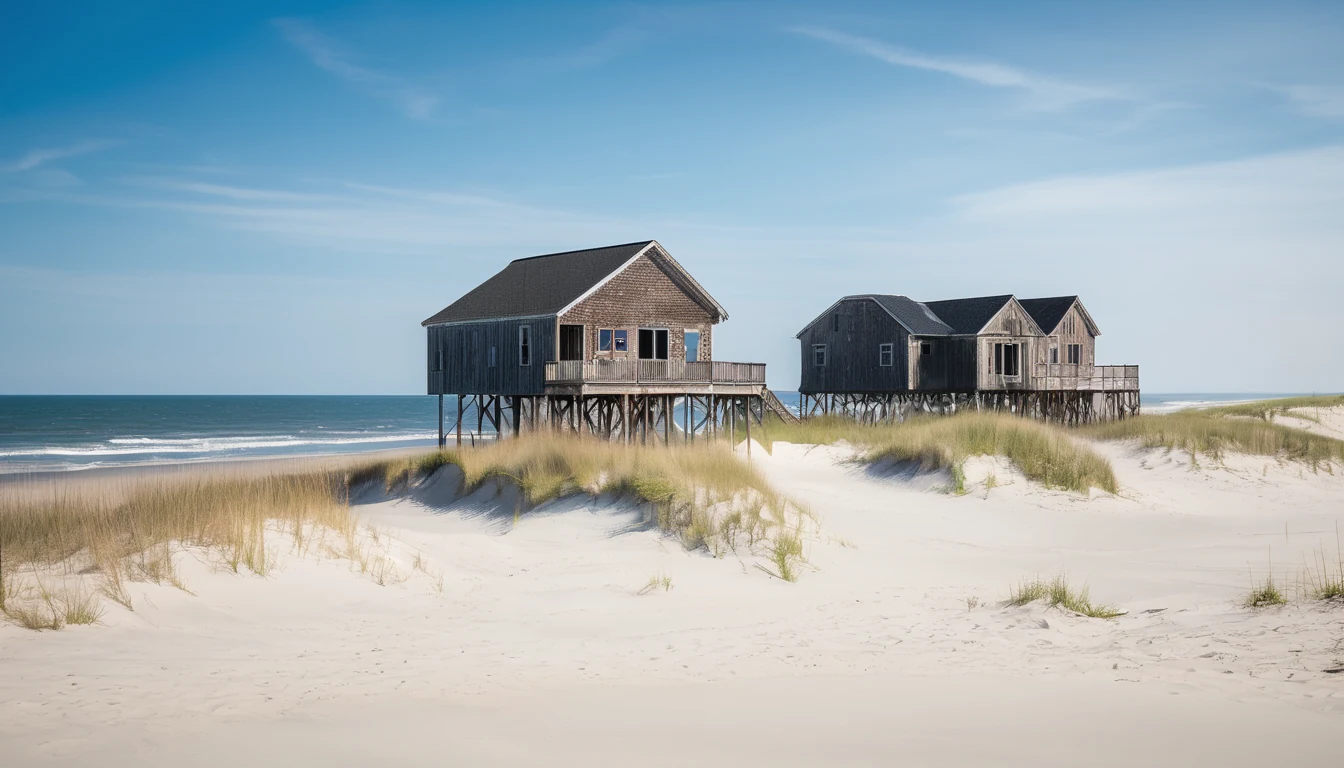
For residents of the Carova 4WD beach area, the wild horses are daily neighbors. Currituck County ordinances and CWHF guidelines require:
- Stay 50 feet away — codified in county ordinance, not a suggestion
- Never feed them — human food causes colic, founder, and death. Feeding is punishable by law
- Drive slowly on the beach, slower near horses
- Keep dogs on a leash — dogs can trigger herd panic
- Report injured horses to CWHF at 252-453-8002
The horses of Corolla have outlasted shipwrecks, storms, and four centuries of change along the Outer Banks. They are one of the last free-roaming horse populations on the U.S. Atlantic coast — and their survival depends on deliberate, evidence-based management in a landscape increasingly shaped by human development.
For more: The Corolla Wild Horse Fund (corollawildhorses.com) manages the herd and operates a museum at 1130E Corolla Village Road, Corolla, NC.