
Who Thrives in Carova, and Who Sells

In this post
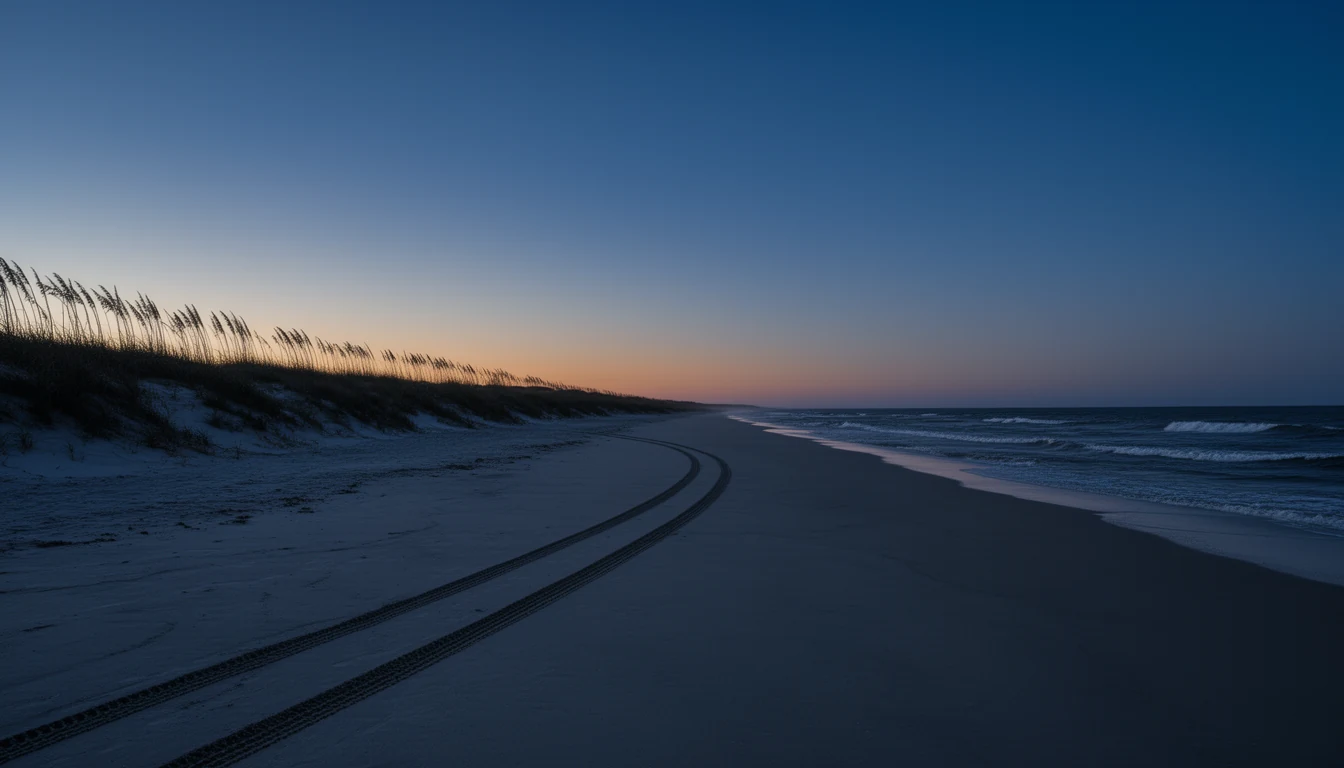
The wind was out of the northeast at 25 knots the Tuesday we walked the house, and the tide was still two hours from slack. A drive that takes 35 minutes on a good low tide took 70. We stayed low on the hard sand. The buyer watched the water the whole way.
She had seen the same house in July. In July the beach drive felt like an adventure. In January it felt like a commute. By the time we reached the carport she had stopped talking about the view and started asking what happens when the road washes out, which is the only reason that showing ended in a contract instead of a withdrawal.
That gap, between how Carova feels in July and how it runs in February, is the whole market. The transaction record sorts buyers into four recognizable profiles. Two of them still own out here a decade later. Two of them list within three years.
The two profiles that stay
Carova holds roughly 200 to 300 year-round residents, and that number has stayed flat for about two decades. It is not a stagnant community. The access requirements and the service distances filter the buyer pool long before anyone reaches a closing table.
The experienced remote investor already owns short-term rentals somewhere else. They know what a revenue calendar looks like in a soft month. They keep a maintenance reserve that is actually funded, and they read the Coastal Barrier Resources System designation as a supply cap rather than an obstacle. There is a fixed number of platted lots in this market and no path to adding more. That reads as protection to someone who has watched a beach town get built out.
The lifestyle buyer wants wild oceanfront and a horizon with nothing on it. They have usually spent a season renting here first. They have priced the operational side honestly and decided the trade is worth it. Some rent the house occasionally. Some never do.
What separates both groups from everyone else is a single assumption: neither expects the logistics to get easier after closing.
The two profiles that list within three years
The aspirational buyer fell for Carova on a vacation. The beach drive felt romantic in August and the isolation read as freedom. They projected expectations from a paved-road market onto a place that does not operate like one. The logistics do not soften with ownership. They harden in January, when the wind is up and the grocery run takes an afternoon. This profile lists within 36 months more often than any other.
The return-chase buyer arrived with a pro forma from a listing sheet or a property manager showing $80,000 to $120,000 in gross rental income, and they need that revenue to carry the mortgage and the insurance. What the pro forma does not show is the weeks when weather trims occupancy, or the years when the wind pool reprices. When collections run 20 to 30 percent under the sheet, the carrying cost comes out of reserves that were never funded.
The tell is visible before the offer, not after. Ask a buyer what they plan to do on a Tuesday in February, and you find out which profile you are talking to.
What the week actually asks of you
The operational load is not abstract. It shows up on a calendar.
Tide tables are the schedule. The nearest official NOAA station is at Duck, and full-time owners check it before committing to a contractor visit or a guest arrival. A neap low tide gives you a wide corridor of hard sand. A spring high tide pushes traffic toward the dune line where the sand is soft and the margin is thin.
Permits are a second calendar. A property with a dwelling in the 4x4 area can get two additional beach parking permits from the Corolla Visitors Center at 500 Hunt Club Drive. Permits are required from the second Saturday in May through the last Saturday in September, and visitor permits are capped at 300 per week at $50 each. If you self-manage a rental, distributing those permits to guests is your job, not the county’s.
Water comes from a well under the lot. Wastewater runs through an engineered system in sand that sits a few feet above the water table, which is why replacement math in the $15,000 to $30,000 range belongs in your reserve and not in a surprise column. Pumping runs a few hundred dollars a service and depends on a truck that can reach you.
Power is grid service, not an off-grid setup. Connectivity for remote work means a satellite link, and the residents who work from here will tell you it changed the calculus for full-time living after 2020.
Who answers when something goes wrong
Carova Beach Volunteer Fire and Rescue runs out of Station 7 at 2169 Ocean Pearl Road, inside the 4x4 zone. The department was chartered in 1982 and is staffed entirely by volunteers. It fields more than forty active members and ten vehicles, plus a lighted helicopter pad beside the station. Response runs 20 to 35 minutes under normal access conditions. In a nor’easter or at high tide, it runs longer.
The closest emergency room is in Nags Head. Helicopter evacuation goes to Dare County Regional Airport when it is warranted. None of that is a reason to avoid Carova. It is a reason to plan your household around it, the way residents do: extinguishers on every level, detectors with cellular backup, and 72 hours of supplies.
Four questions before you write the offer
- Can you make a 90-minute beach drive home from the grocery store in bad weather without resenting the house?
- Can your household run 72 hours with no outside service access?
- Is the isolation a feature you want, or a fantasy you are buying for a week?
- If rental income comes in 30 percent light for two seasons, can you still carry the property?
Two yes answers and two honest no answers tell you more than any showing will. The people who thrive here are not exceptional. They answered those questions correctly before they wrote the check.
What the exit actually looks like
Carova is not a liquid market, and the numbers say so plainly. Average days on market runs 99 to 115 days against 48 to 51 nationally. The median sale price over the prior 12 months ran about $700,000, down roughly 6 to 8 percent from the prior period. The buyer pool is cash and portfolio buyers carrying private flood coverage. There is no NFIP coverage inside the CBRS, and there is no Fannie Mae or Freddie Mac financing, so a conventional buyer with 20 percent down cannot simply walk in and buy.
That constraint cuts both ways. It caps how fast your value can climb in a hot cycle. It also caps how far it can fall in a correction, because the people who can buy here are the people who can carry here. A 7 to 15 year hold is not conservatism for its own sake. It is the window that lets you ride out a downturn without becoming a forced seller.
The honest trade-off
You give up convenience and the assumption that help is twenty minutes away. You take on a vehicle that costs more to buy and more to run than a mainland car, plus a house with a well and a septic system you have to understand. The calendar belongs to the tide.
What you get is eleven miles of beach with no high-rise behind the dune and a herd of wild horses that answers to nobody. That is not a small thing, and it is not for everyone. The buyers who do well out here are the ones who knew which of those two facts mattered more to them before they signed.
Numbers here are current as of publication and worth re-checking against county records and your own insurance quotes before you write an offer. If you are working through that four-question list and want a second read on a specific house, send it over. We will pull the flood panel and the septic file, and you can decide with the numbers in front of you instead of after.
Keep reading
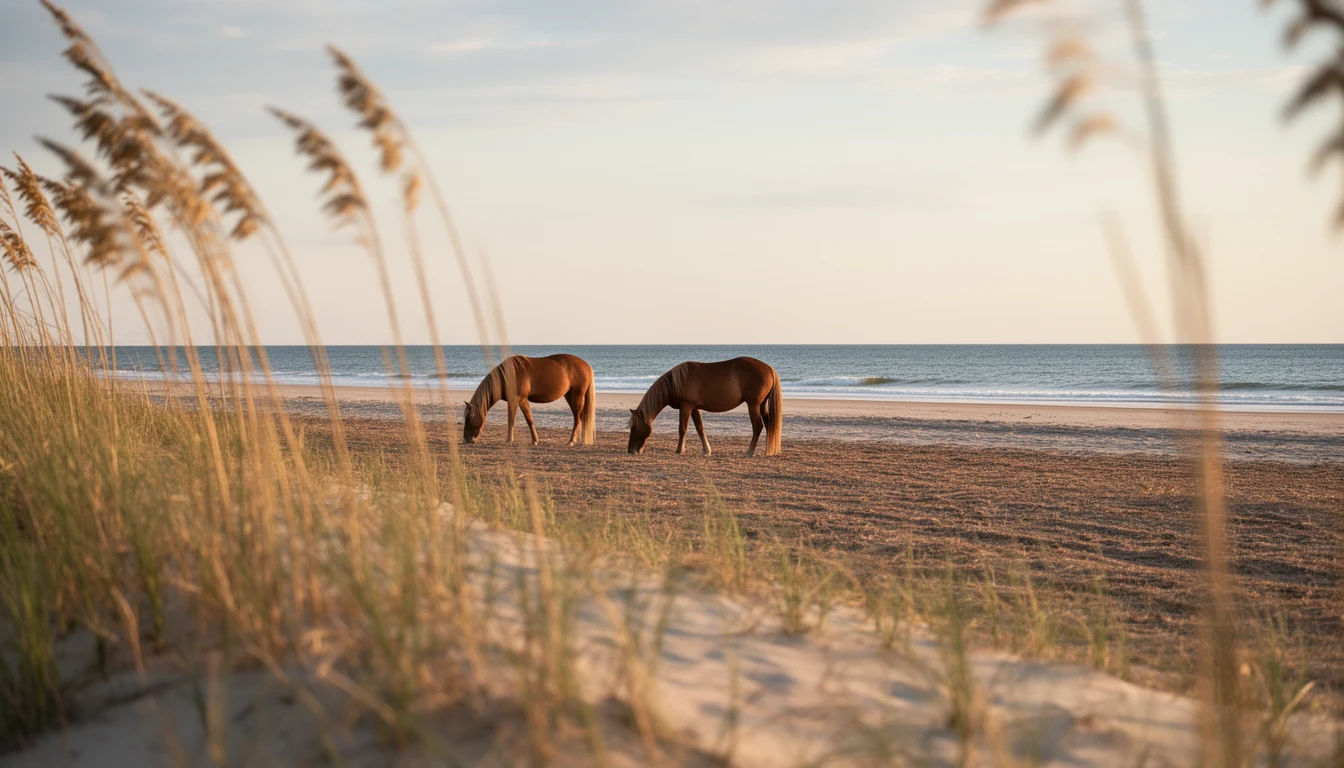
5 Wild Horse Rules for Carova Owners
Five rules Carova owners live by around the wild horses: the 50-foot law, no feeding, beach etiquette, no domestic horses, and trash enclosures.
Carova Emergency Care: Who Comes
Where emergency care actually comes from in Carova: a volunteer station inside the 4x4 zone, a beach-drive response, air medical, and the road to an ER.

6 Erosion Checks Before You Offer
Six erosion checks Carova oceanfront buyers should run before an offer: CAMA setback lines, dune vegetation, elevation certificates, and pilings.