
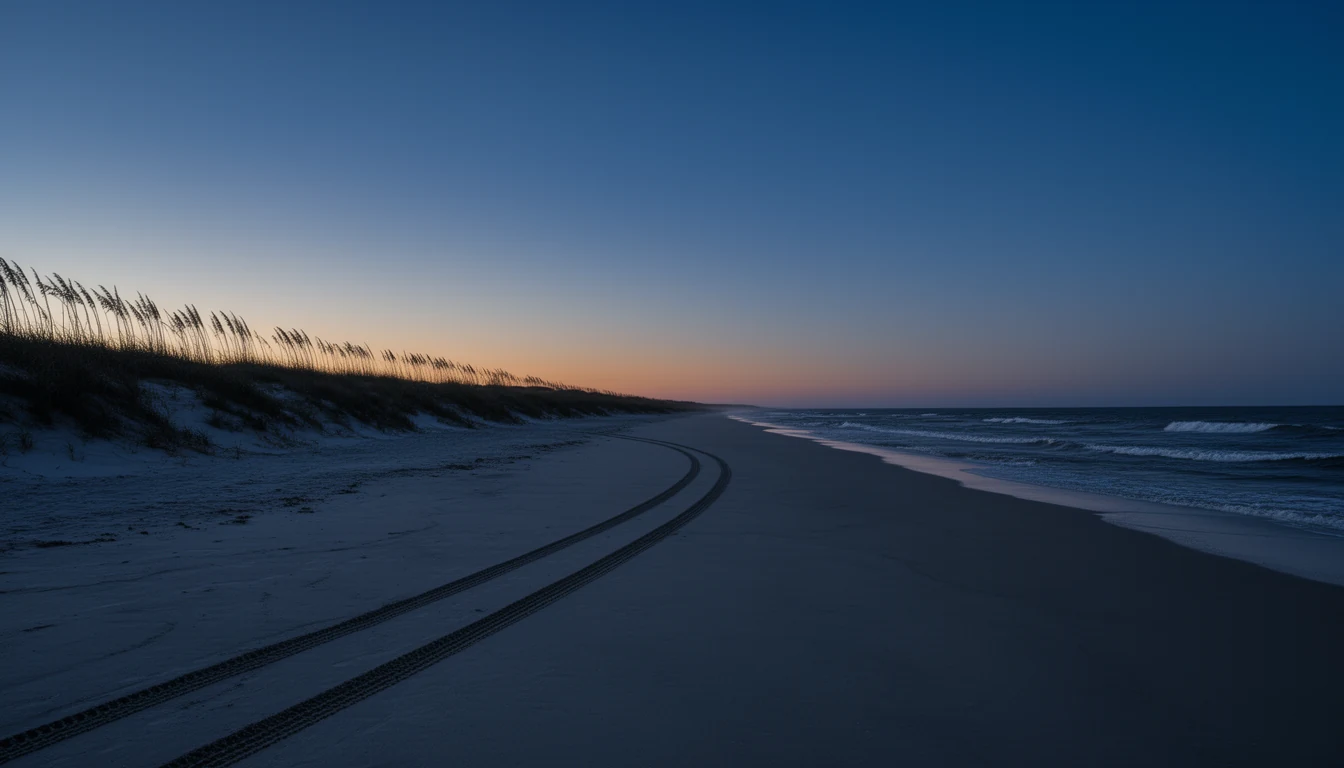
At dusk in late September, Ocean Pearl Road is dark enough that you drive it on memory. That is the thing about a beach with no streetlights: north of the pavement, after the last glow of Corolla fades behind you, the light comes from whatever the sky is doing and not much else. The exception is the bay at 2169 Ocean Pearl Road. Station 7 keeps its lot lit, and on a Tuesday night you can hear the surf working the other side of the dune while a truck idles in the driveway.
I have walked buyers through that lot. Almost every one of them asks the same question first, usually somewhere around the second mile marker. If something happens out here, who comes?
It is a fair question, and the honest answer is better than the rumor. Here is what an emergency actually looks like from a 4x4 address.
There is a fire station north of the pavement
The line that gets repeated is that Carova has no fire station, that you are on your own past the ramp. That was true before 1982.
An effort to organize fire protection in Carova started in the early 1980s. The department was chartered in 1982 as a non-profit corporation under contract with Currituck County to provide fire and rescue service to the area. The early members numbered fewer than twenty, and they built the first section of the present building over most of that decade. They met in each other’s houses while they waited for a station to meet in. The first apparatus was assembled from surplus and parts: an SUV set up as an EMS quick response vehicle, a brush truck of questionable quality, and a fire engine the members called Big Red that spent a lot of time being repaired.
Today Carova Beach Volunteer Fire and Rescue runs more than forty active members and ten fire, emergency, and rescue vehicles out of a 6,000 square foot station, with an adjacent lighted helicopter pad of about 100 square feet. Station 7 sits at 2169 Ocean Pearl Road. Station 7-2 in Swan Beach currently carries a landing zone for air medical services, and a future station is planned at that location.
The service district runs the twelve miles of unimproved road from the North Beach access at the end of the pavement in Corolla to the North Carolina and Virginia line. All of it is covered by volunteers. That last part matters more than the building does.
What a response actually looks like
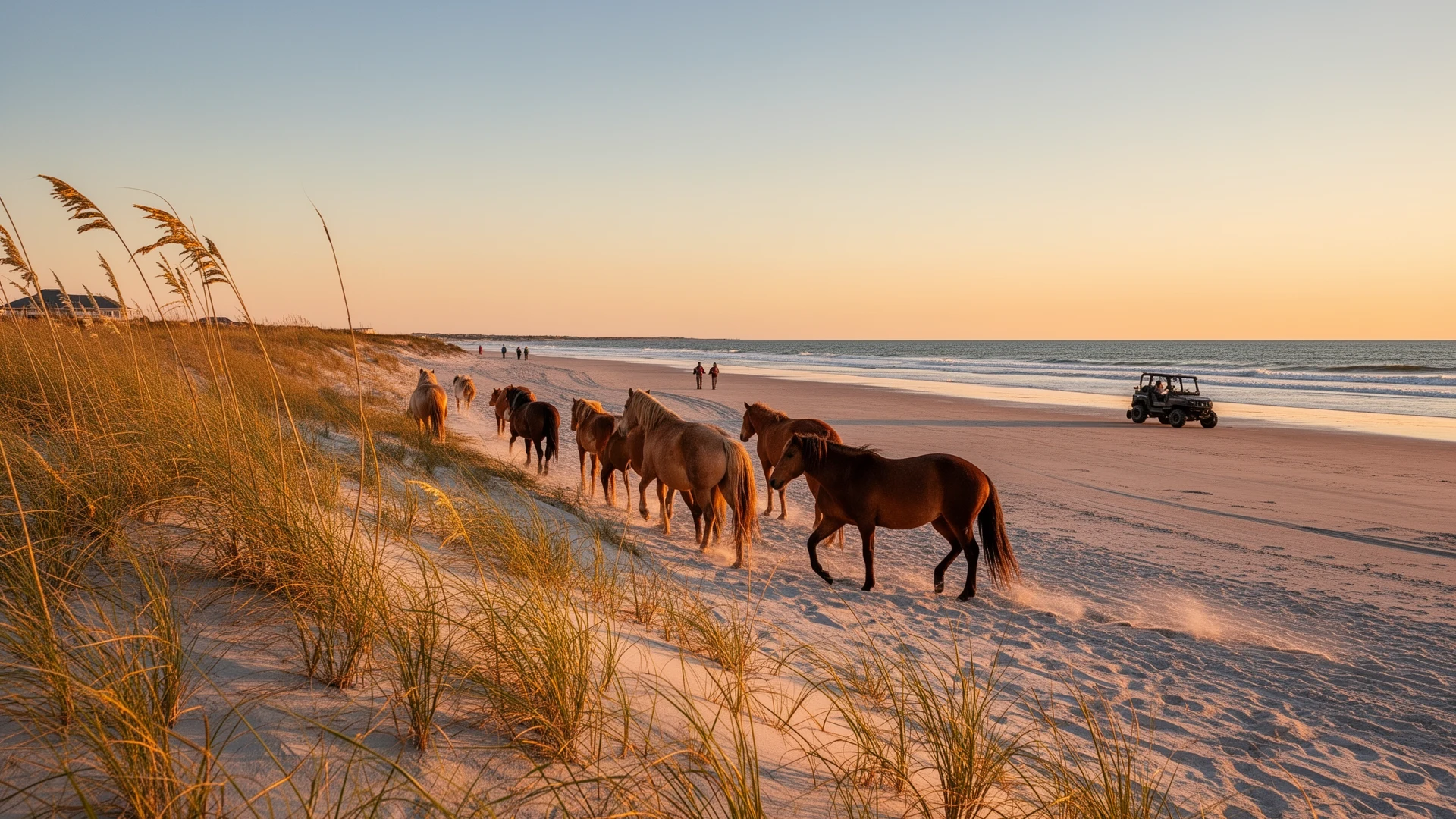
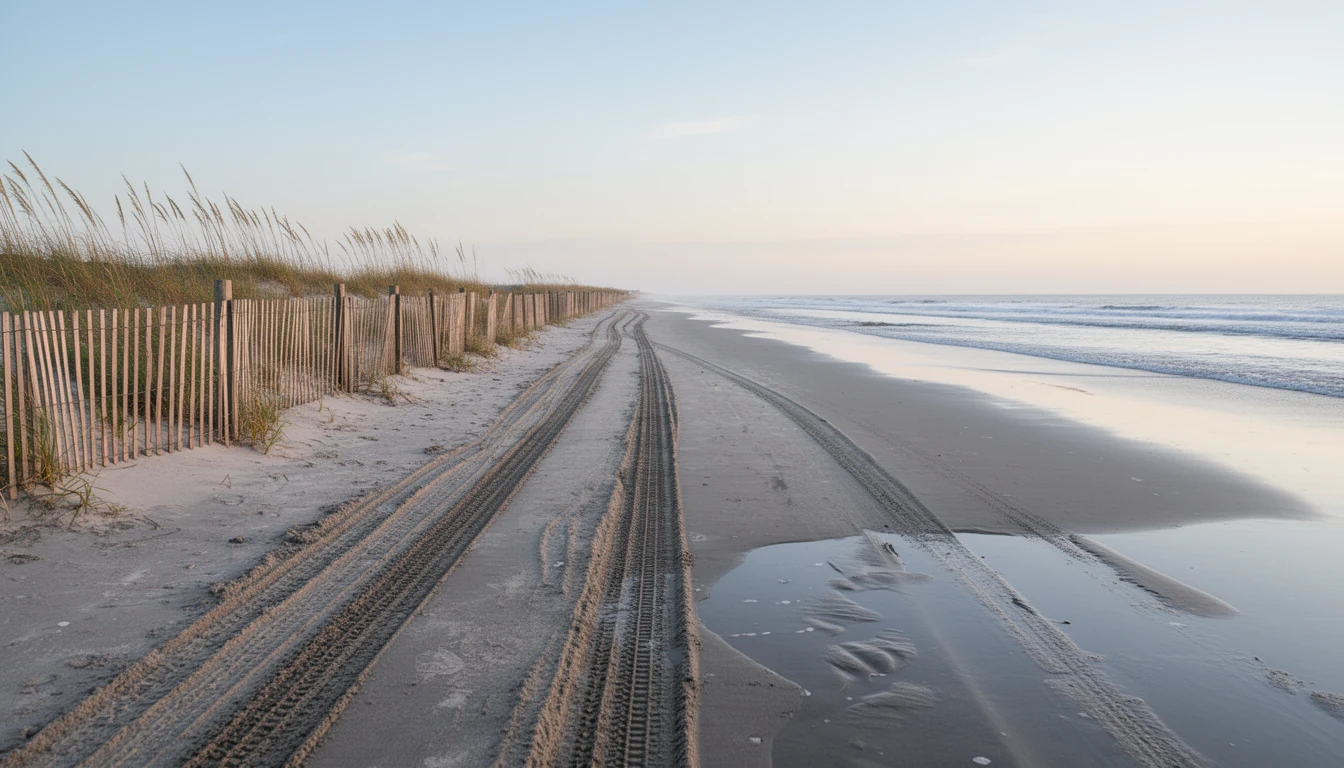
The truck drives the same road you drive, which means it drives the same sand you drive. Beach speed limit is 15 miles per hour, and between milepost 14.5 and milepost 17 vehicles use the dune-line lanes from 9 a.m. to 5 p.m., Friday before Memorial Day through Labor Day. A call that comes in on a low tide is one kind of call. A call that comes in two days after a nor’easter, with the corridor pushed narrow and soft, is another.
Then there is the volunteer part. Members are not sitting in a lounge waiting for a tone. They are at home, at work, in Corolla picking up lumber. The membership meets the third Thursday of every month at 6 p.m. at Station 7, and the person who answers your call is likely someone you waved at on the beach that morning.
None of that is a criticism. It is the shape of the coverage you are buying into, and knowing the shape is the whole point.
There is no hydrant to hook to
North of the pavement, every property has its own well. There is no municipal water system in the 4x4 zone, which means there are no hydrants, which means water for a fire has to be brought to your house rather than pulled from a main.
That changes the arithmetic of a house fire. It also explains why the department’s page for residents and property owners leads with escape planning and smoke alarms rather than with response times. Minutes count either way. Out here they count twice.
That page is worth knowing about for a second reason: it hosts the documents insurers most often ask for regarding response times and fire capabilities. If you are shopping a policy for a Carova address, that is the material your agent wants to see.
The part you control: being findable
Night is genuinely dark out here, and a mailbox reflector at the end of a sand driveway is not the same thing as an address.
The department’s auxiliary sells reflective house number signs: $30 for the sign alone, $85 with installation. Their own explanation is the best argument for it I can give you. “Night can be very dark in our area,” the order page says. “Reflective signs at the street help us find you in an emergency.”
The other half of being findable is knowing what to say when you call. Have the street address as it appears on the county record ready, and know the nearest mile marker if you are on the beach. A dispatcher who can place you in ten seconds rather than two minutes is a measurable difference.
Air medical is part of the plan, not a last resort
Two landing zones serve the 4x4 zone: the lighted pad beside Station 7, and the zone at Station 7-2 in Swan Beach. A helicopter can meet the ambulance at the station, or lift from the beach.
For a buyer, that is one more reason the access itself is the asset. A firm tide and a graded beach corridor are not just your commute. They are the route a stretcher takes.
The hospital math
Here is the number most buyers underestimate. The nearest emergency department is Outer Banks Health Hospital at 4800 South Croatan Highway in Nags Head, a critical access hospital with a dedicated emergency department. From Corolla, that is about thirty-one miles and about fifty-eight minutes by road.
Now put the beach leg in front of it. The drive from the end of the NC-12 pavement to central Carova averages thirty to forty-five minutes at low tide in a properly equipped 4x4, and sixty to ninety minutes in marginal tide or sand. A non-emergency trip to an emergency room can run an hour and a half door to door on a good day, before weather.
The other full-service option is Sentara Albemarle Medical Center in Elizabeth City, at 3050 Halstead Boulevard Extended. It is a 90-bed hospital with a 24-hour emergency department that moved into a newly constructed campus in 2025. From Corolla it is the longer road, and it is the one a lot of northern Outer Banks residents use for specialty care.
For anything that needs a trauma center, you are leaving the region. The nearest Level I trauma center is ECU Health Medical Center in Greenville.
What follows from that is not complicated. Out here, the first several minutes of a medical emergency are yours. Learn CPR if you are going to live here year round. Keep a stocked first aid kit in the house and one in the truck. Write your address on a card in the glove box. Know which side of the beach your driveway is on when the tide is high.
Storms, and the permit that gets you back
Mandatory evacuations are issued through Currituck County. After a major storm, the beach corridor is typically closed to non-emergency traffic for 24 to 96 hours while Currituck County Emergency Management assesses conditions and clears debris. Owners plan for 48 to 96 hours of full self-sufficiency during and immediately after a named storm.
Two things are worth doing before you ever need them. Register for Currituck Alert, the county’s notification system, so an evacuation order finds you instead of the other way around. And read the county’s re-entry rules, because getting back in is tiered: essential personnel first, then residents and property owners, with businesses going through a county re-entry permit process. A weekend owner who has never read that page is the person sitting at the bridge for a day.
The honest trade-off
What you are buying out here is not the emergency coverage you would get in Moyock, and it would be strange to pretend otherwise. You are buying a volunteer department with a real station, real apparatus, and a lighted helicopter pad inside your own community, standing behind an eleven-mile beach drive that runs on tide tables. The equipment is there. The road is the variable.
That trade shows up in insurance premiums, in how you plan a storm week, and in how far you are willing to be from an emergency room on a Tuesday afternoon. For the right buyer it is a fact rather than a dealbreaker. For the wrong buyer, it is the thing they figure out in the first winter.
If the emergency question is the one keeping you up about a Carova property, send the listing over. We will pull the station coverage for that stretch, the tide table for your block, and the drive time to an emergency department from the actual address, and you can make the call with the numbers in front of you.