
Building in Carova: The Sand Tax

In this post
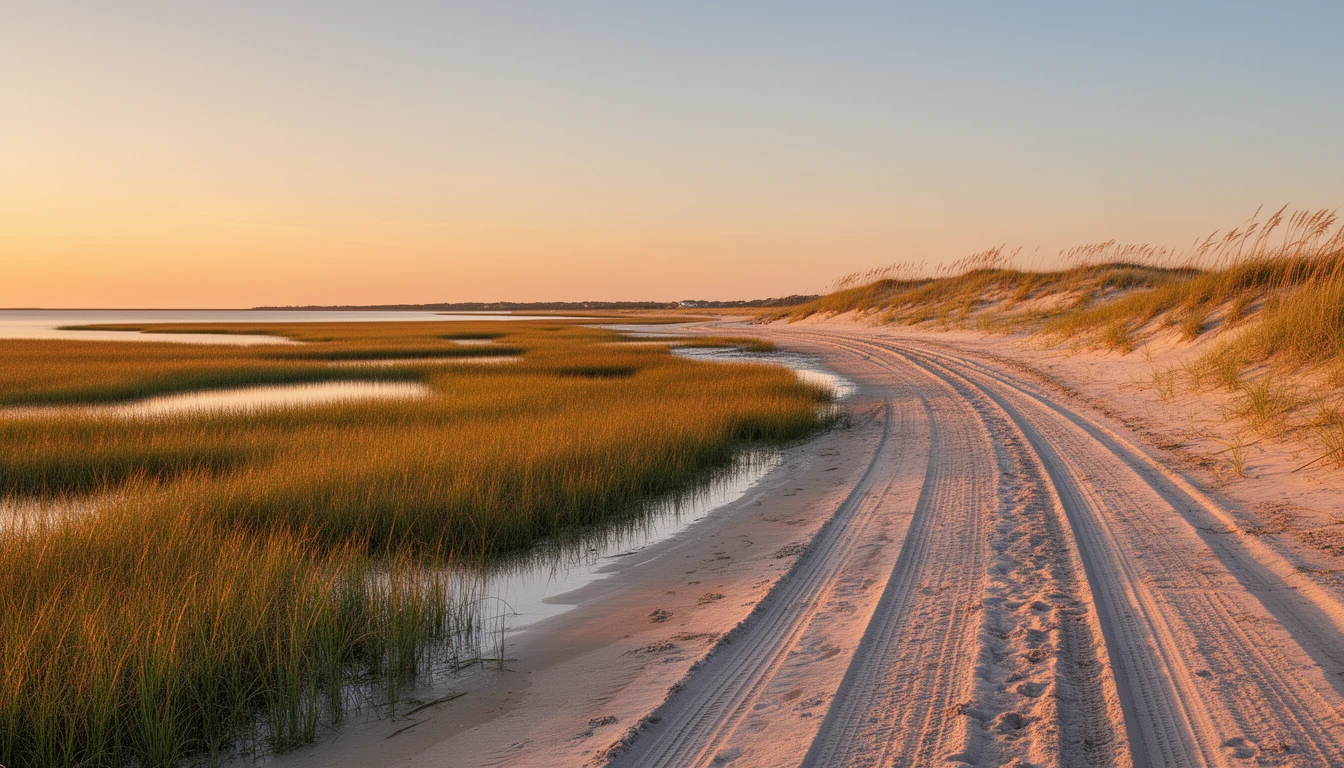
If you have ever stood at the end of NC-12 in Corolla and watched a loaded 4x4 head north onto the sand, you have already seen the first line item of a Carova build. It is not the lumber. It is the eleven miles between the pavement and the lot.
Every sheet of plywood, every bundle of shingles, every electrical panel, and every plumbing fixture crosses open beach before it reaches a job site in Carova. Standard delivery trucks cannot make that trip. Materials stage at the Corolla access point, get transferred to beach-capable 4x4 trucks and trailers, and move north in loads sized by what the sand will carry. Ready-mix concrete trucks cannot drive the beach at all, so pours are batched on-site or delivered in smaller mixers.
That logistics chain is why locals use the term “sand tax”: the 20-35% premium every construction project here carries over mainland equivalents. It is not a margin contractors invent. It is the real cost of load limits, driver time, equipment wear, and weather windows on a road that disappears twice a day with the tide.
How Much Does a Carova New Build Really Cost?
The honest number depends on the house. A 3-4 bedroom build of roughly 2,000 square feet lands in the $450,000-$700,000+ range all-in, sand tax included. A 5-7 bedroom oceanfront build at 3,500+ square feet runs $700,000-$1,200,000+. New well and septic add $20,000-$40,000. Generator, Starlink, and mechanical systems run $12,000-$25,000 more.
Budget a 15% contingency at minimum, and 20% is the more prudent number in this market. The buyers who go over budget here are not the ones who priced the house wrong. They are the ones who applied mainland assumptions to a market where a single high-tide week can stall deliveries and a permit comment can add months.
The Sand Tax Breakdown
The premium comes from six places: material transport on the beach drive, a small specialty coastal labor pool, weather and tide windows that delay crews, heavy equipment that must be towed across sand, a construction timeline that extends carrying costs, and coastal-grade specifications like hurricane-rated windows and hot-dip galvanized hardware. None of it is discretionary. All of it is priced in before a contractor can give you a straight estimate.
The Permit Clock Nobody Quotes
New construction requires a Major CAMA permit under North Carolina’s Coastal Area Management Act. The review window is 75 days minimum, and projects near sensitive environmental areas can go longer or land in front of the Coastal Resources Commission. Budget 90-120 days from submission to issuance, and remember the land is carrying cost while you wait.
Oceanfront setback rules compound the timeline. Structures must sit back from the first line of stable natural vegetation by a distance calculated from the long-term erosion rate at the specific site. On faster-eroding parcels, the permitted building envelope is smaller than the lot. Designing a house before confirming that envelope is the most expensive mistake in the process, because plans drawn to the property line cannot be permitted as drawn.
Renovations live on a different clock: minor CAMA permits typically issue within 10-25 days. But a renovation that crosses the 50% substantial improvement threshold converts to new construction rules, which pulls the whole project back into the Major permit track.
Why Does Everything Take Longer Here?
Construction timelines in Carova run 12-24 months from permit submission to move-in, and the reasons are structural, not accidental.
The subcontractor pool is small. Most electrical, plumbing, HVAC, and specialty subs are not willing to drive eleven miles of beach to a job site, and the ones who will command a premium for the access time. A delay on one phase pushes every subsequent subcontractor’s start date, because the calendar belongs to a handful of crews who all know each other.
The beach itself closes the worksite. High tides, tropical weather events, and winter conditions can shut the drive to heavy vehicles for days at a time. Coastal-spec materials have longer procurement lead times than standard stock. And every Currituck County inspection requires site access coordination that adds buffer to each phase transition.
The Trade-Off, Honestly
You are not paying the sand tax twice. You are paying once for what the beach prevents: no development pressure, no municipal services, no paved road, no impulse-buyer market next door. The same logistics that make a build expensive are what keep Carova Carova.
The buyers who succeed here treat construction as a 2-3 year capital commitment, budget the premium from day one, and hire a contractor with completed projects in the 4x4 zone specifically. Outer Banks experience is not the same thing. Ask for the beach builds, check them, and then check the tide chart before you sign.
The Bottom Line
Building on a 4x4 beach is not building with extra shipping costs. It is a different operating system: staged materials, permit clocks, tide-driven schedules, and a contractor pool measured in a handful of names. Get the sand tax into the budget and the timeline into your expectations, and the build becomes what it should be: the price of admission to one of the last wild stretches of the Eastern Seaboard.
Keep reading
5 Wild Horse Rules for Carova Owners
Five rules Carova owners live by around the wild horses: the 50-foot law, no feeding, beach etiquette, no domestic horses, and trash enclosures.
Carova Emergency Care: Who Comes
Where emergency care actually comes from in Carova: a volunteer station inside the 4x4 zone, a beach-drive response, air medical, and the road to an ER.
6 Erosion Checks Before You Offer
Six erosion checks Carova oceanfront buyers should run before an offer: CAMA setback lines, dune vegetation, elevation certificates, and pilings.